Understanding Verinag: A Guide to the Mughal Spring
Explore the history, imperial architecture, and hydrological significance of the site where the River Jhelum begins.
Dive into the history and architecture of Verinag spring, a masterwork of Mughal engineering tucked away in South Kashmir.
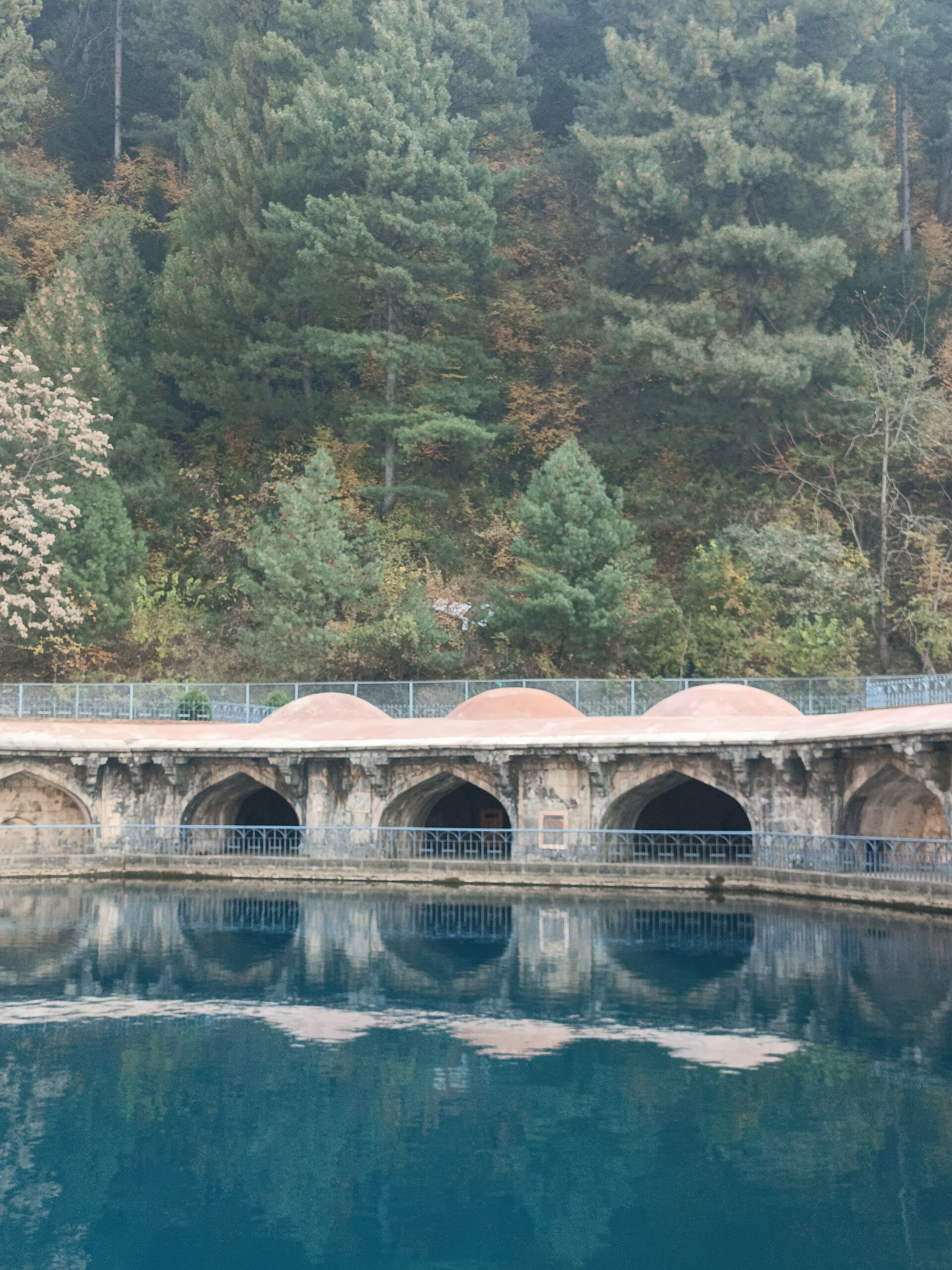
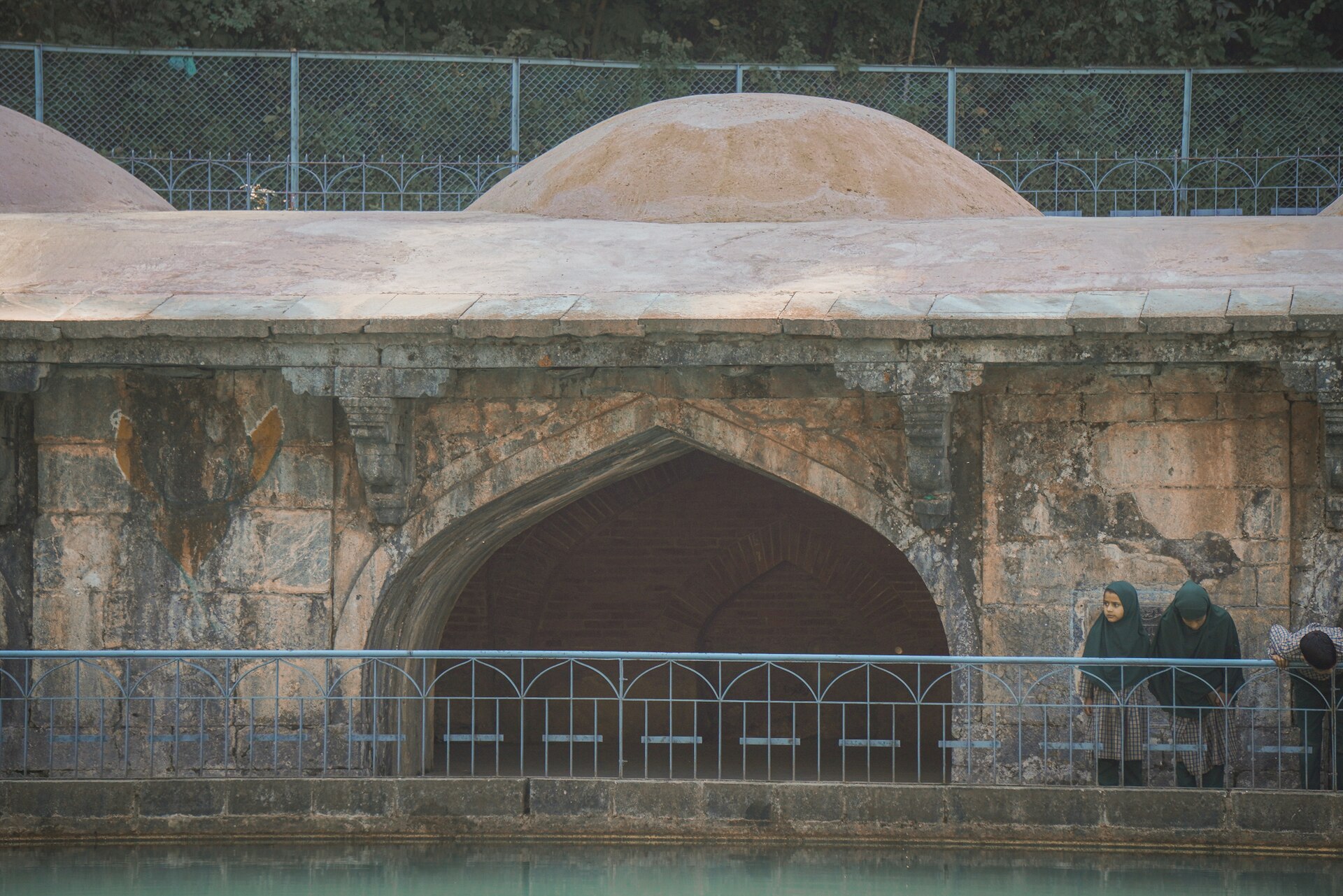
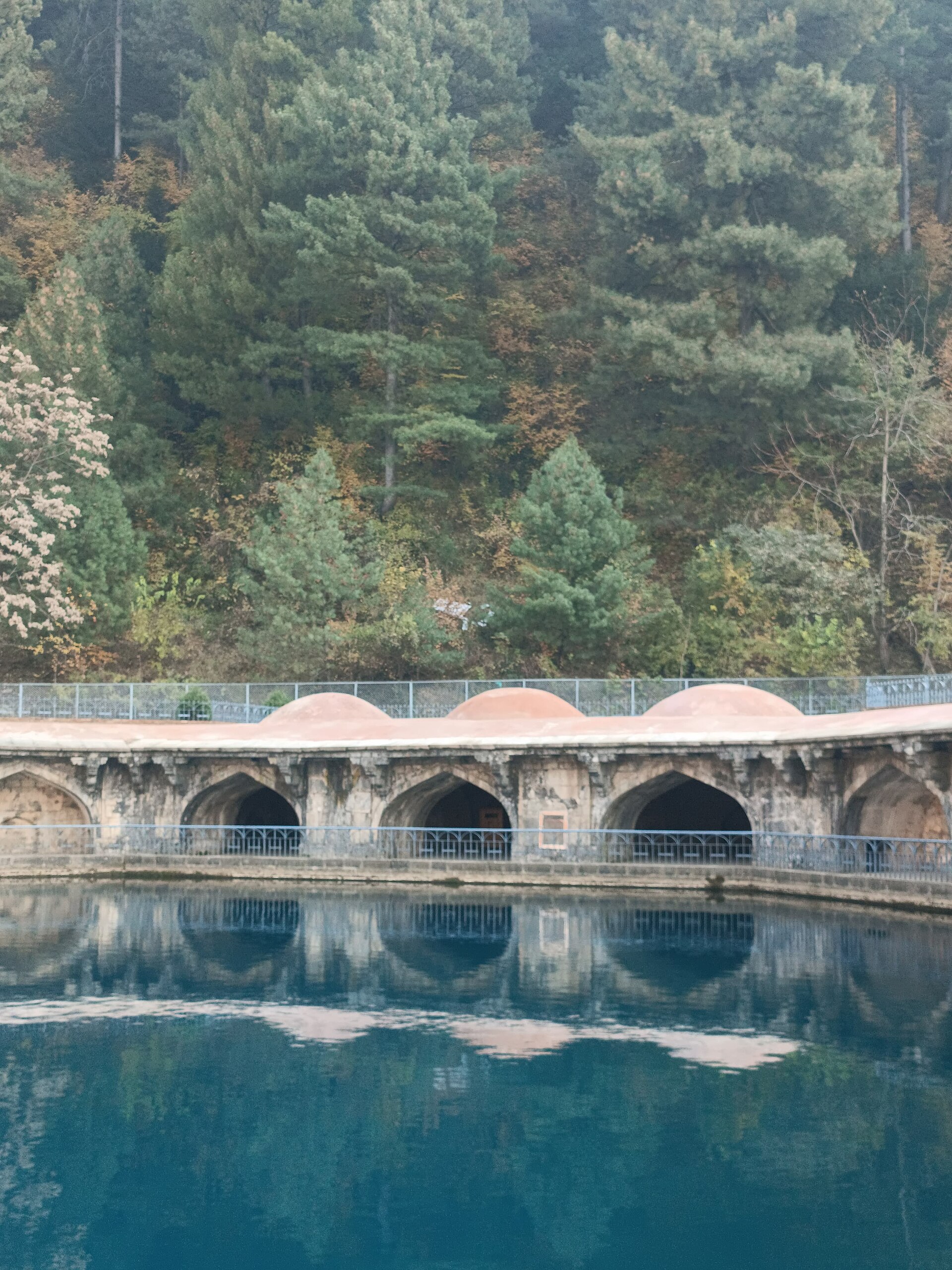
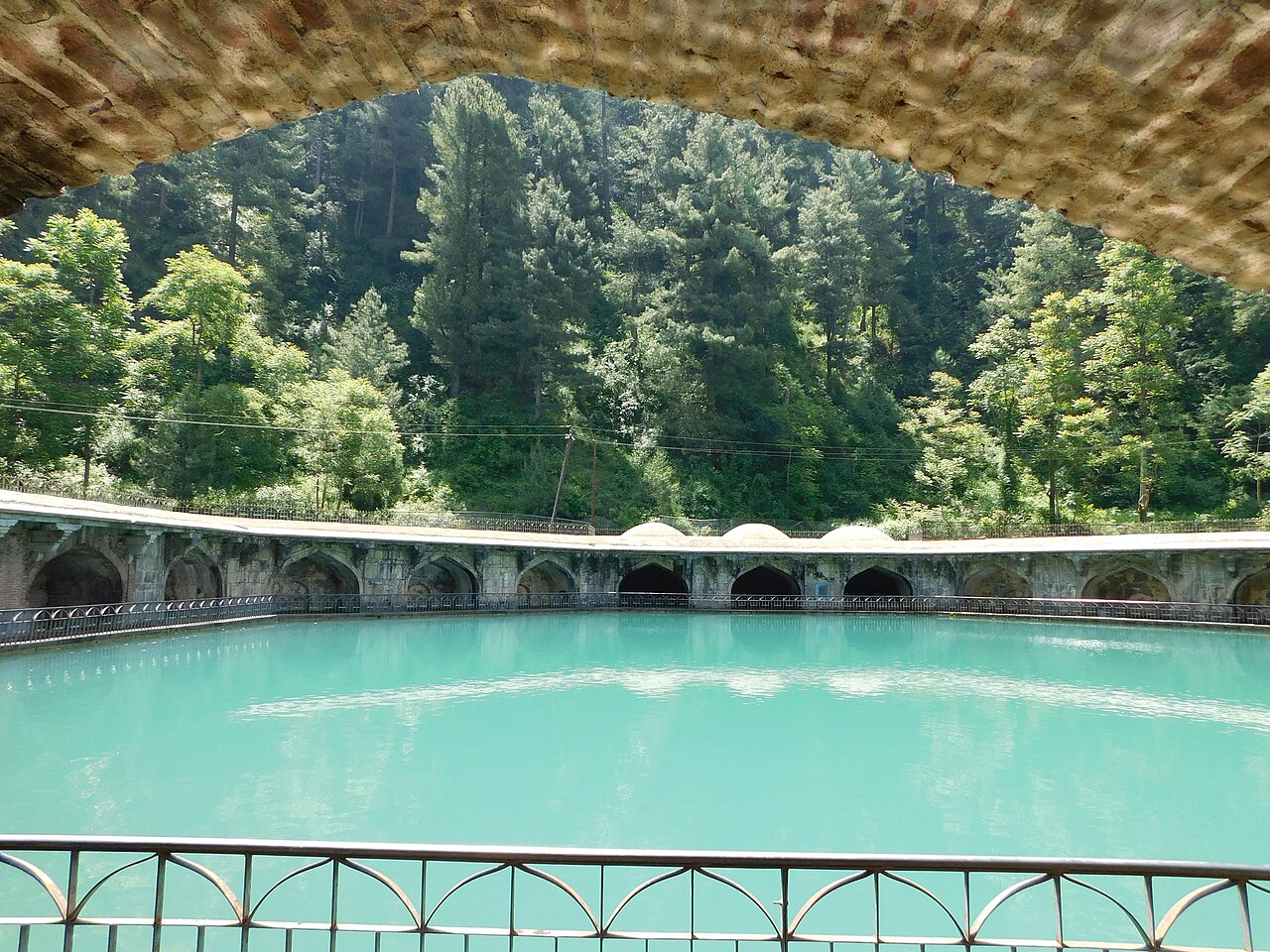
The historic brick arcades built by the Mughal emperors.Photo: Habba khatoon509 · CC BY-SA 4.0
Long before European travellers mapped the Pir Panjal range, Mughal emperors viewed this weeping mountain cliff not merely as a water source, but as a sacred canvas. They brought Persian garden designers, master masons, and hydraulic engineers across mountain passes to tame a wild spring into a royal sanctuary.
Understanding what is verinag spring requires looking past the manicured lawns of today and examining the imperial ambition that shaped seventeenth-century Kashmir. Jahangir and his son Shah Jahan did not just build gardens; they inscribed their authority onto the geography of the valley.
Where is verinag located in kashmir? It sits tucked into the southeastern edge of the Anantnag district, right where the base of the mountain meets the flat agricultural plains. Here is a close look at the history, architecture, and enduring legacy of the site.
The History of the Mughal Spring
Before the Mughals claimed the site, Verinag was a local pagan shrine venerating Nila Nag, a mythical water deity from Kashmiri folklore. Emperor Jahangir, who famously declared Kashmir to be paradise on earth, became obsessed with the spring during his travels in the early sixteen-hundreds.
According to Jahangir's own memoirs, the Tuzuk-i-Jahangiri, the spring was originally marshy and unrefined. He ordered the source to be cleared, lined with stone, and given an octagonal shape to contain the churning waters properly. His son Shah Jahan later completed the surrounding brick arcade and galleries.
This architectural patronage transformed a rugged mountain pool into an imperial monument. The Mughals understood that controlling water in Kashmir meant controlling the lifeblood of the valley's agrarian economy.
- Commissioned initially by Emperor Jahangir in the early 17th century.
- Expanded and arched by his successor Shah Jahan around 1620.
- Historically linked to the mythological spring deity Nila Nag.
Architecture of the Octagonal Tank
The most striking feature of the monument is its strict geometric precision. The pool is built as a deep octagon, surrounded on all sides by recessed brick arches that step back into the dark stone of the mountain wall.
The brickwork reflects Persian design traditions adapted to local materials. Red bricks, fired to withstand the harsh Kashmiri winters, are bonded with lime mortar that has endured centuries of dampness and seismic tremors.
The arched niches around the water were originally designed to house lamps or provide shaded seating for nobles watching the spring. Today, they create a dramatic amphitheatre of shadow and reflection around the turquoise water.
Jahangir and his son Shah Jahan did not just build gardens; they inscribed their authority onto the geography of the valley.
Why Verinag is Considered the Jhelum Source
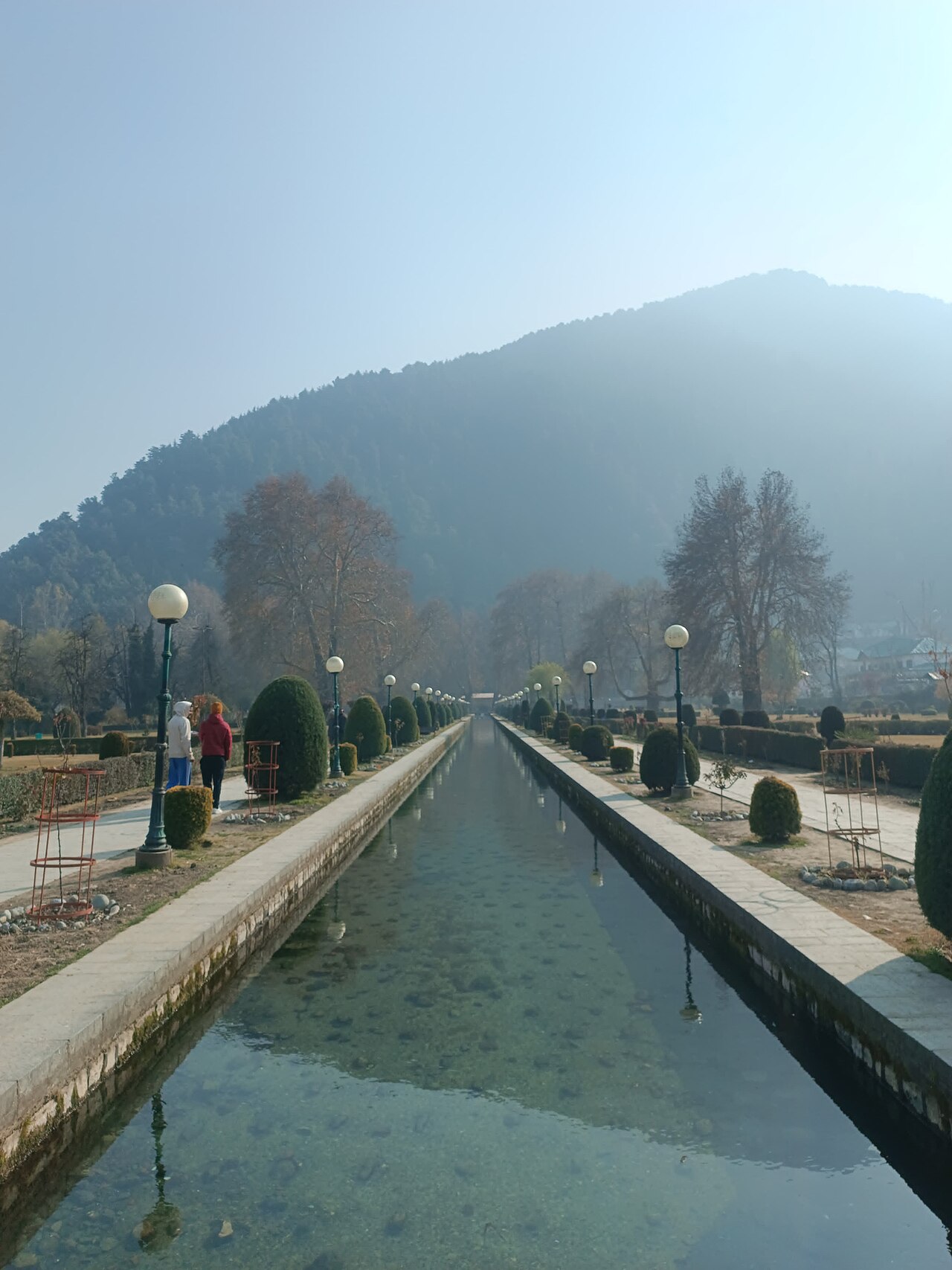
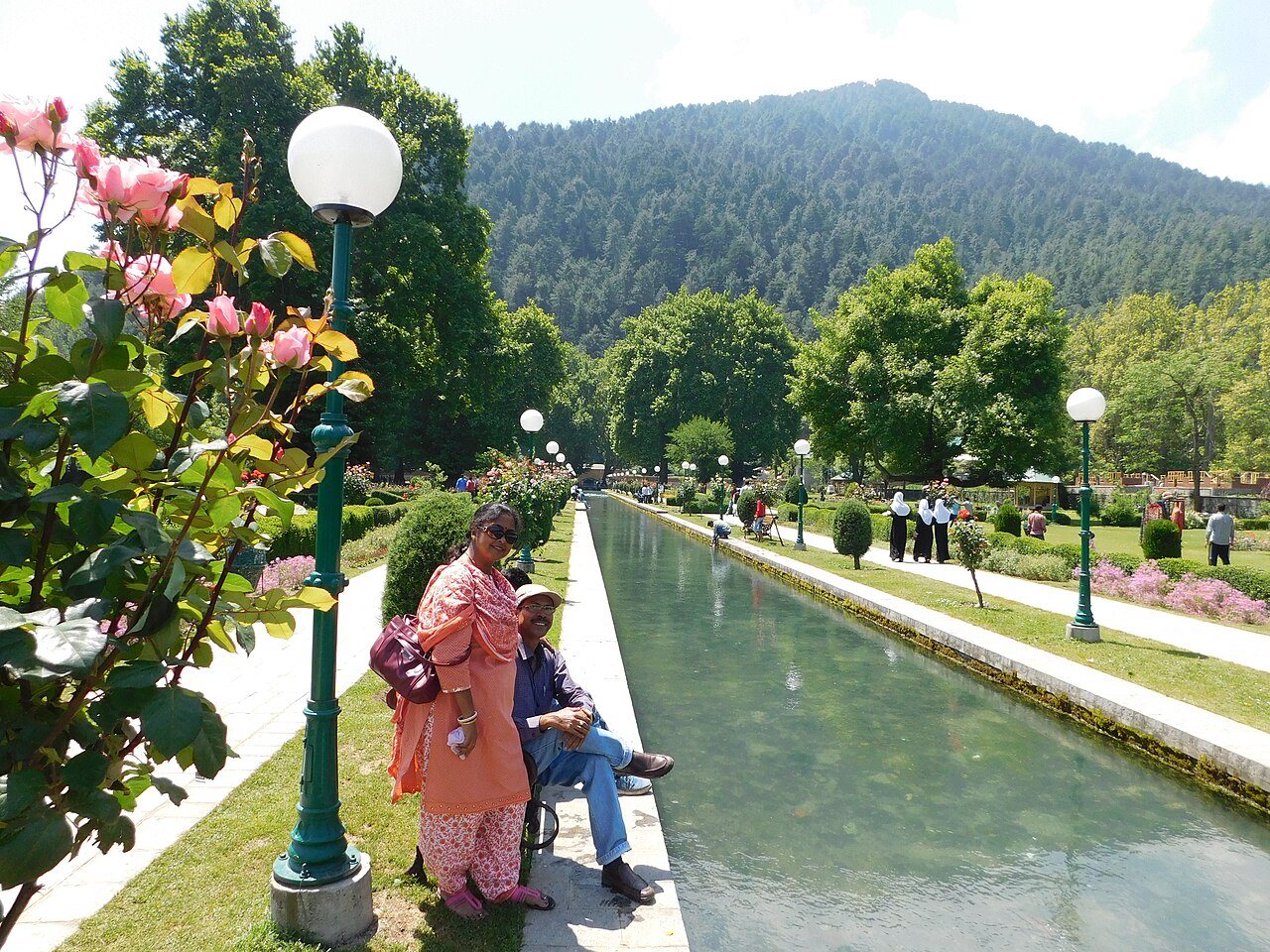
In geographical terms, Verinag is recognized as the principal source of the Vitasta, known today as the River Jhelum. From this single mountain basin, water pours into a constructed canal, flows northward through the gardens, and eventually meanders across the entire length of the Kashmir valley before crossing into Pakistan.
While smaller streams feed the upper basin from higher elevations, this specific subterranean discharge is celebrated as the official birthplace of the river that defines Srinagar's geography and history.
Standing by the outlet gate and watching the heavy volume of water rush out helps you understand why ancient civilisations revered river sources as divine entities.
The Cultural Significance of the Site
Verinag holds a unique position in the cultural tapestry of South Asia. It represents a synthesis of indigenous Kashmiri reverence for springs and imperial Persian landscape aesthetics.
Over the centuries, poets, painters, and royal chroniclers have written about the restorative power of the site. It served as a vital staging post for royal entourages travelling between Lahore and Srinagar via the Mughal Road.
Today, it remains a symbol of shared heritage, drawing architecture enthusiasts, historians, and curious travellers who want to look past standard hill-station itineraries.
Folklore and Local Beliefs
Local elders still recount stories of the ancient dragon spirit said to inhabit the deep cavern beneath the spring, a remnant of pre-Islamic Nilamata Purana traditions that predated royal Persian intervention.

Preservation of Heritage Monuments
Maintaining a four-hundred-year-old water monument is an ongoing challenge for archaeological authorities. Moisture management, brick erosion, and tourist foot traffic require constant conservation efforts.
Recent years have seen careful restoration work on the brick arcades and surrounding garden walls, ensuring that the original masonry is protected from modern pollutants.
Visiting these sites with respect—keeping off historical walls and refraining from littering—helps ensure that future generations can witness the same pristine turquoise waters that fascinated Jahangir.
Before you book
Understanding Verinag requires appreciating the deep connection between royal ambition and the natural hydrology of the mountains. It is a monument that bridges myth, imperial history, and local Kashmiri identity.
When you stand by the octagonal pool and watch the water emerge from the mountain, you are witnessing a piece of engineering that has defined the valley for four centuries.
Explore the history of Kashmir's springs
Let our guides walk you through the architecture and stories behind Verinag, Kokernag, and Achabal on your next journey.
Discover Heritage ToursCaption for your own post
The historic brick arcades of Verinag spring. A four-hundred-year-old Mughal masterpiece in South Kashmir.
Written by
Kashmir, Jammu & Ladakh specialists
We plan and run trips across Kashmir, Jammu and Ladakh every week of the year. Everything here comes from routes we drive, stays we inspect and questions our travellers actually ask.
Written by a Skywale editor who has spent years researching Mughal heritage sites across the Kashmir valley.
Quick answers
Questions we get asked
What is Verinag spring?
Verinag spring is a historic Mughal water sanctuary and the primary source of the River Jhelum, featuring a deep octagonal stone basin and terraced gardens.
Where is Verinag located in Kashmir?
Verinag is located in the southeastern part of the Anantnag district, approximately eighty kilometres from Srinagar, near the foothills of the Pir Panjal range.
Who built the Verinag garden and arcade?
The initial stone basin was commissioned by Emperor Jahangir in the early seventeenth century, and his son Shah Jahan later built the surrounding brick arcades.
Is the water in Verinag spring drinkable?
While the water is crystal clear and originates from deep underground aquifers, visitors are advised against drinking directly from the basin due to conservation regulations.
Why is the Jhelum river important to Kashmir?
The Jhelum is the central hydrological artery of the Kashmir valley, supporting agriculture, urban settlement in Srinagar, and historic trade routes for centuries.
Photography credits
- Photo: Habba khatoon509 · CC BY-SA 4.0
- Photo: UnpetitproleX · CC BY 4.0
- Photo: SHYAMAL CHANDRA GHOSH · CC BY-SA 4.0
- Photo: Habba khatoon509 · CC BY-SA 4.0
- Photo: SHYAMAL CHANDRA GHOSH · CC BY-SA 4.0
- Photo: Ms Sarah Welch · CC0
- Photo: UnpetitproleX · CC BY-SA 4.0