Monastic Life at Thiksey: A Glimpse into the Tradition
Understanding the daily rhythm, teachings, and community behind the yellow and red walls of Ladakh's most striking Gompa.
Step behind the prayer wheels and butter lamps to understand monastic life thiksey, exploring how young novices join the Gelugpa order and sustain centuries of tradition.
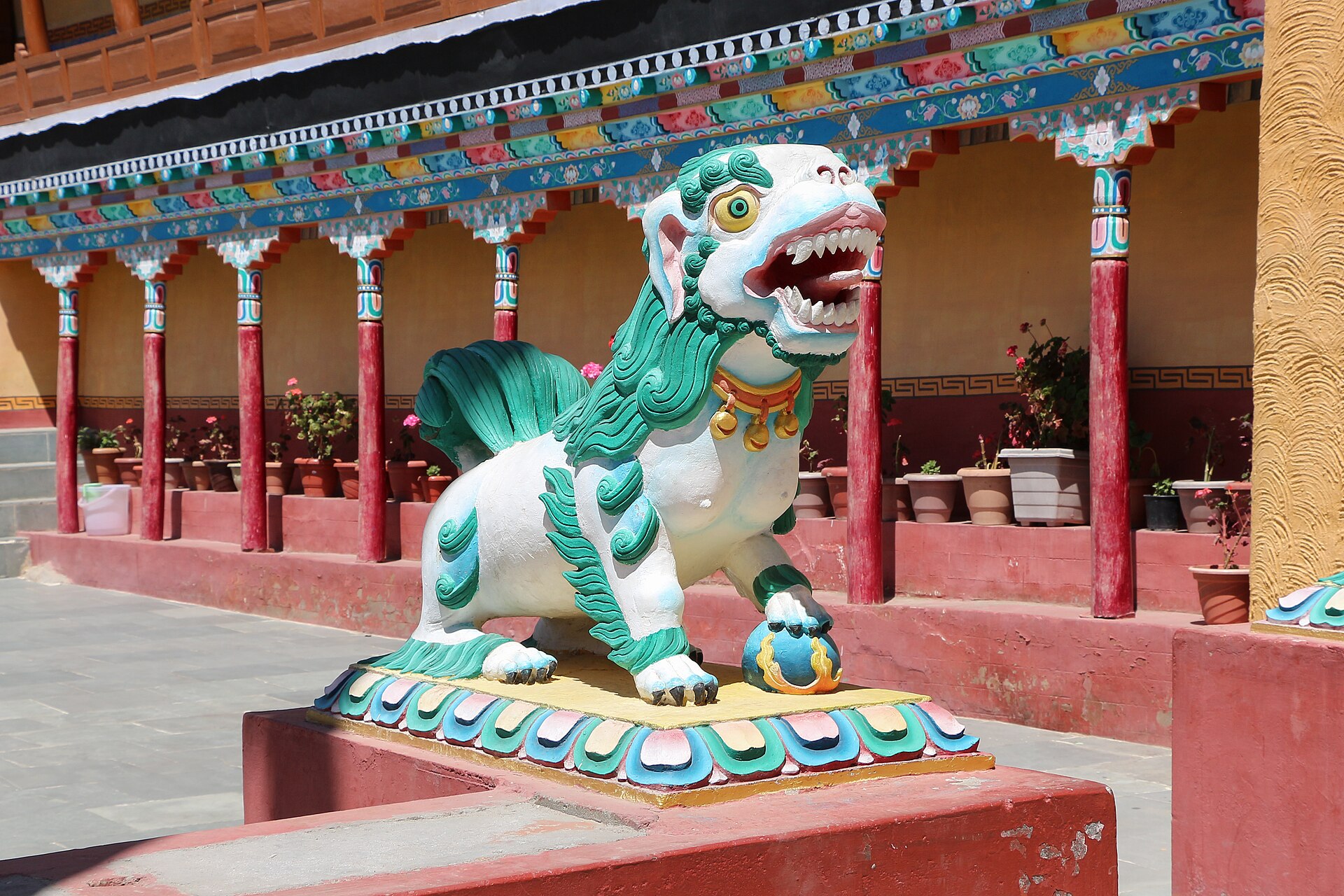
Dawn breaks over the multi-tiered complex of Thiksey Monastery in the Indus Valley.Photo: Bernard Gagnon Canon EOS REBEL T4i · CC BY-SA 4.0
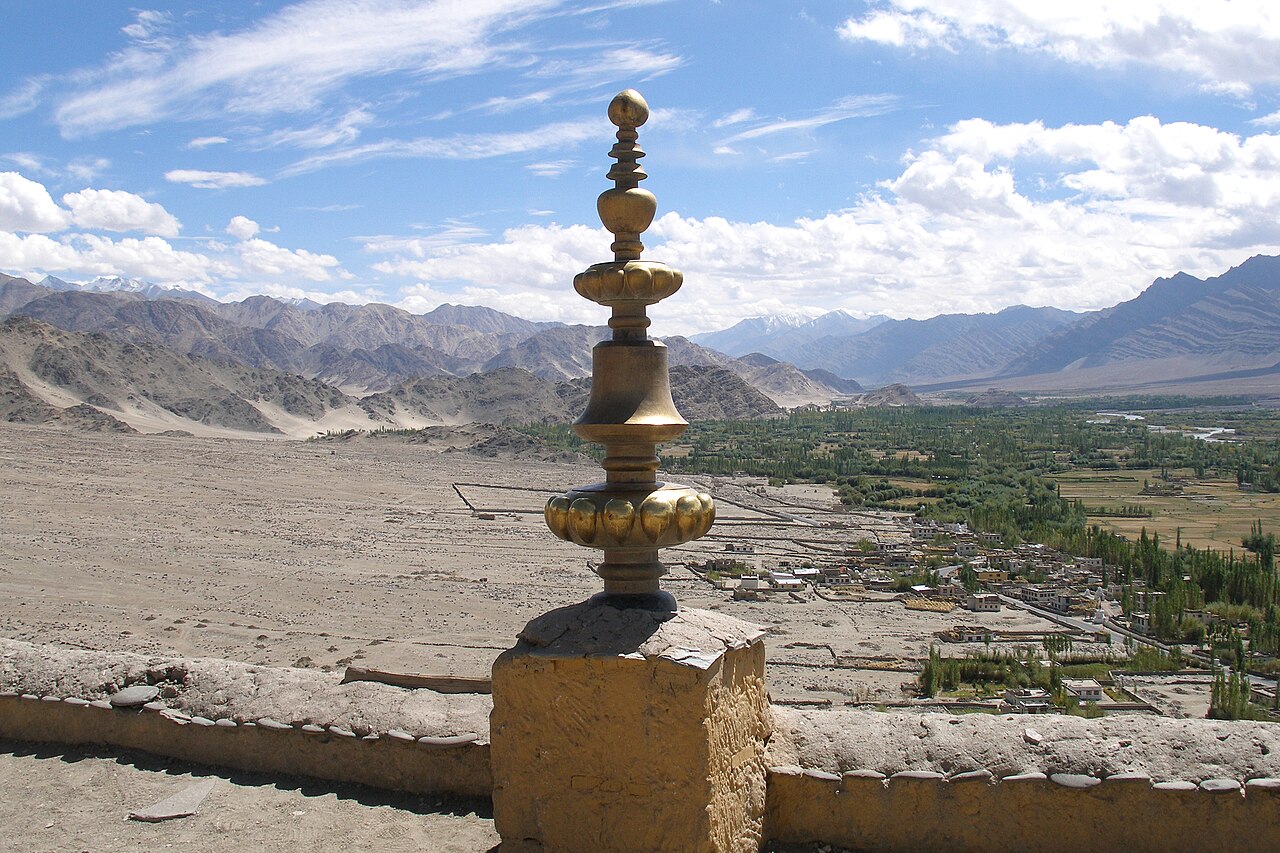
The smell of melting yak butter and roasting barley hits you before you even catch sight of the main assembly hall. Standing at the base of Thiksey Monastery at dawn, the desert wind carries the low, vibrating hum of horns echoing off the arid cliffs of the Indus Valley. For most travellers, this massive twelve-story complex resembles the Potala Palace in Lhasa from afar, but looking closely at monastic life thiksey reveals a working, breathing community rather than a static monument.
During my visits here over the years, I have learned that understanding this place requires looking past the 49-foot Maitreya Buddha. It demands watching how the young novices fold their maroon robes, how the senior lamas debate texts in the courtyard, and how daily survival at 11,800 feet is intertwined with ancient spiritual practice. The Gelugpa tradition shapes every hour of the day here, governing everything from water collection to the midnight reading of scriptures.
If you want to grasp what draws people to spend weeks volunteering or studying in Ladakh, you must look at the inner mechanics of the monastery. It is an education system, a social safety net, and a spiritual stronghold all at once. Let us walk through the traditions that keep the prayer wheels spinning year after year.
The Gelugpa Roots and the Yellow Hat Tradition
Thiksey belongs to the Gelugpa school of Tibetan Buddhism, commonly known as the Yellow Hat sect, founded by Je Tsongkhapa in the fourteenth century. When you walk through the older sections of the monastery, you notice the distinct yellow ceremonial hats worn during specific rituals. This lineage places a heavy emphasis on logic, rigorous debate, and extensive textual study before a monk can claim any advanced standing.
Unlike some of the older Nyingma or Drukpa monasteries scattered across Ladakh, the Gelugpa institutions operate with a strict administrative hierarchy. Decisions regarding land management, festival dates, and the allocation of duties are made by the head lama in consultation with senior elders. This organizational clarity is part of why monasteries like Thiksey and Hemis have survived political shifts and modern economic pressures remarkably intact.
- Founded on the teachings of Je Tsongkhapa
- Characterized by yellow ceremonial hats worn in assembly
- Strict emphasis on debate, logic, and philosophy
The Strict Daily Routine of a Thiksey Monk
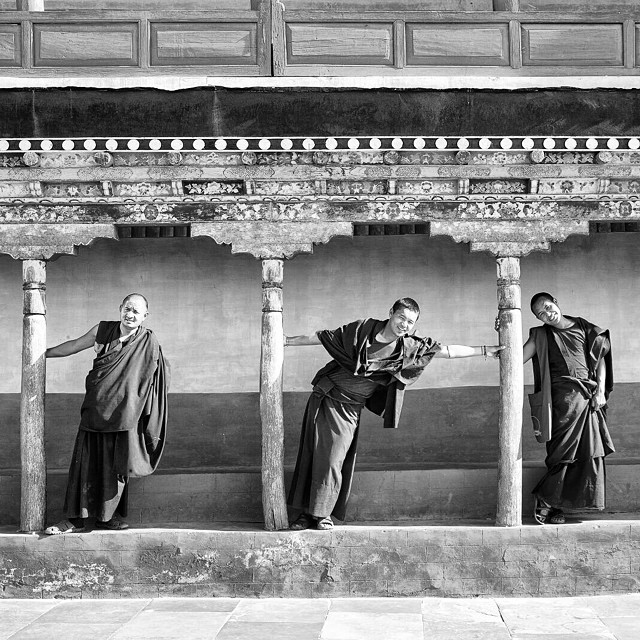
The alarm clock for a monk at Thiksey is not a digital chime, but the deep, resonant drone of the dung-chen horn blown from the rooftop before sunrise. By 5:00 AM, regardless of whether the winter temperature outside has plunged to minus twenty degrees Celsius, the resident monks gather in the cold assembly hall for morning prayers. They chant from traditional unbound woodblock-printed texts, their voices harmonising in low, guttural tones that seem to rattle the clay plaster on the walls.
After morning prayers come butter tea, tsampa (roasted barley flour), and brief moments of social exchange before chores begin. Some monks are assigned to the temple kitchens, stoking wood fires to prepare enormous copper cauldrons of lentil stew. Others clean soot off butter lamps, haul water, or tend to the small terraced gardens below the monastery walls. The afternoons are typically reserved for classroom instruction, memorising root texts, and practicing ritual instruments.
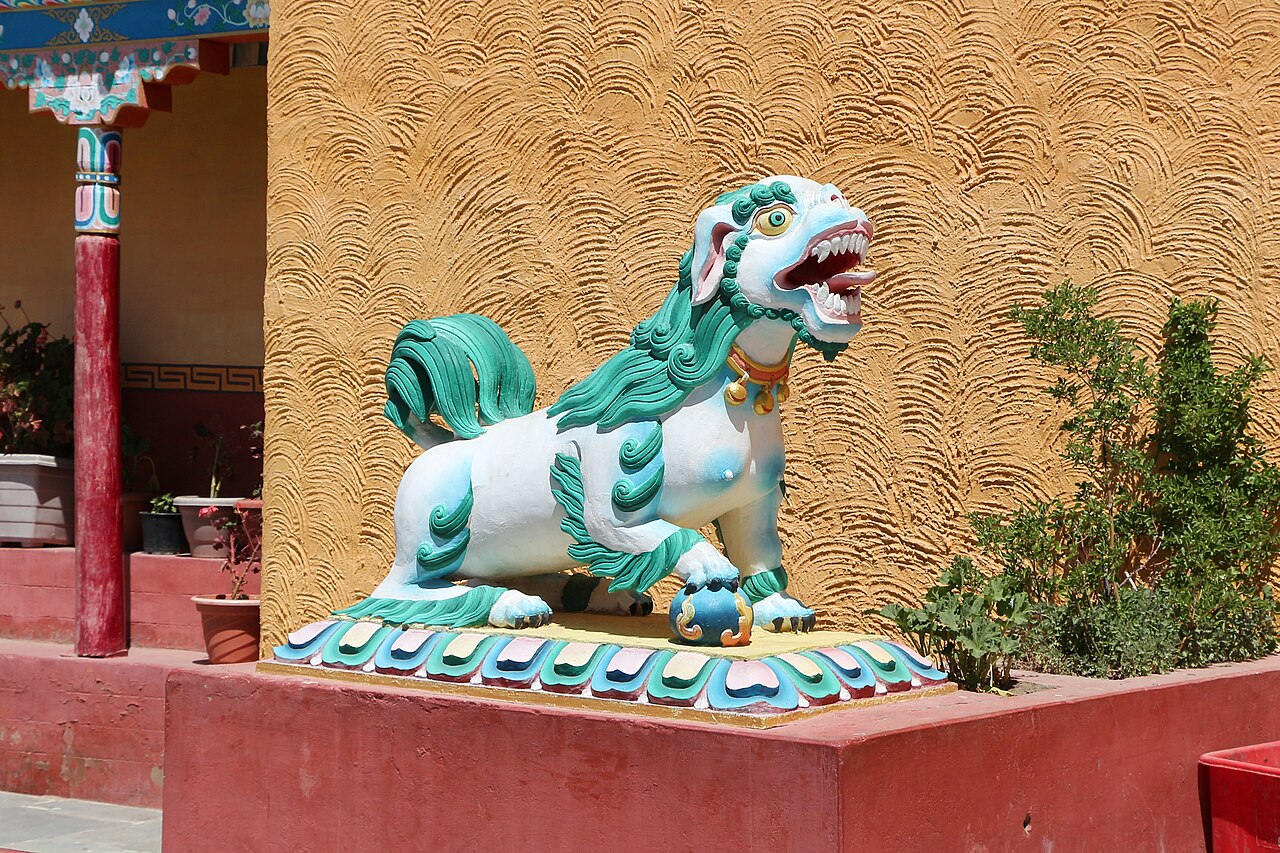
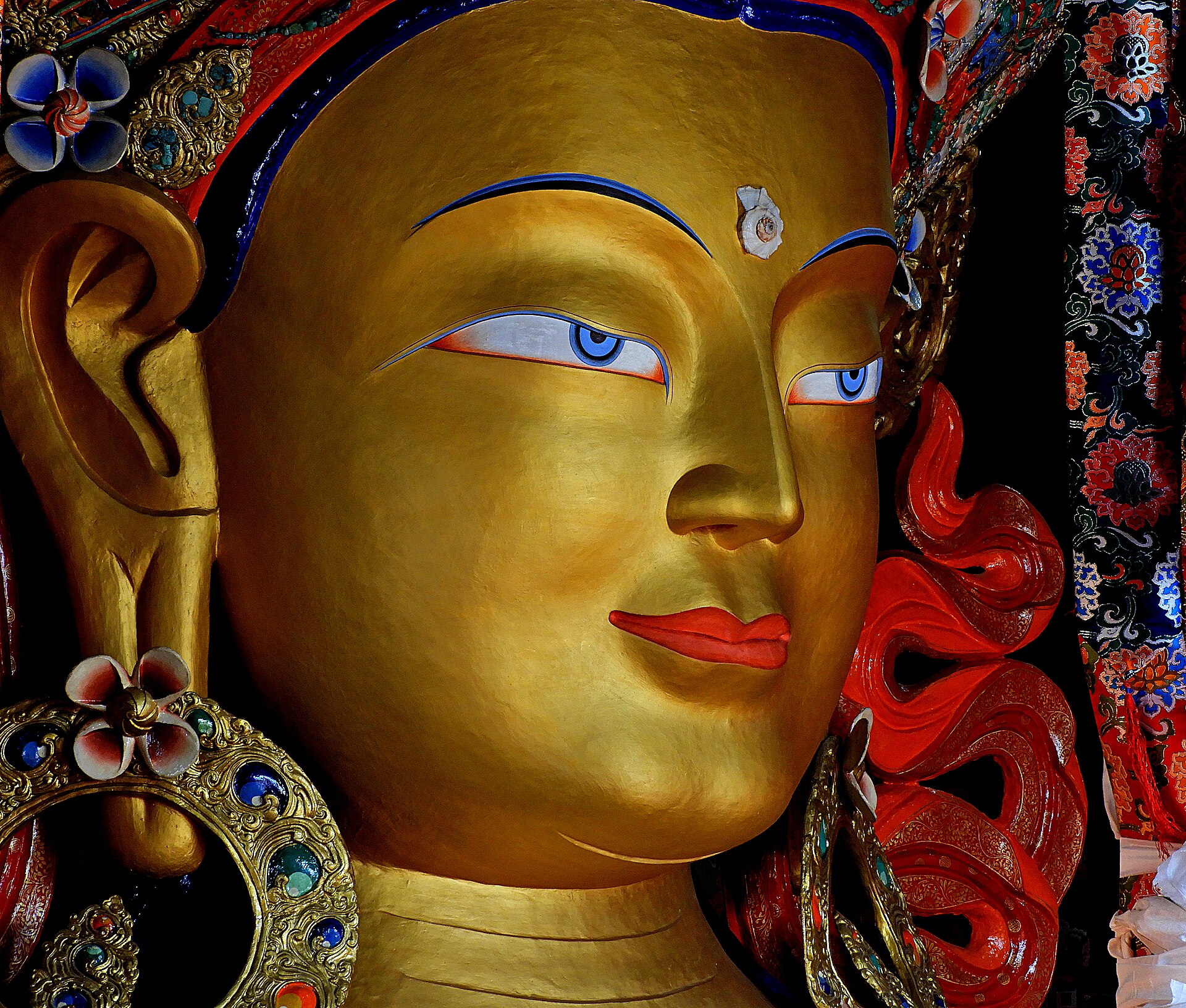
The alarm clock for a monk at Thiksey is not a digital chime, but the deep, resonant drone of the dung-chen horn blown from the rooftop before sunrise.
The Journey from Village Boy to Novice Monk
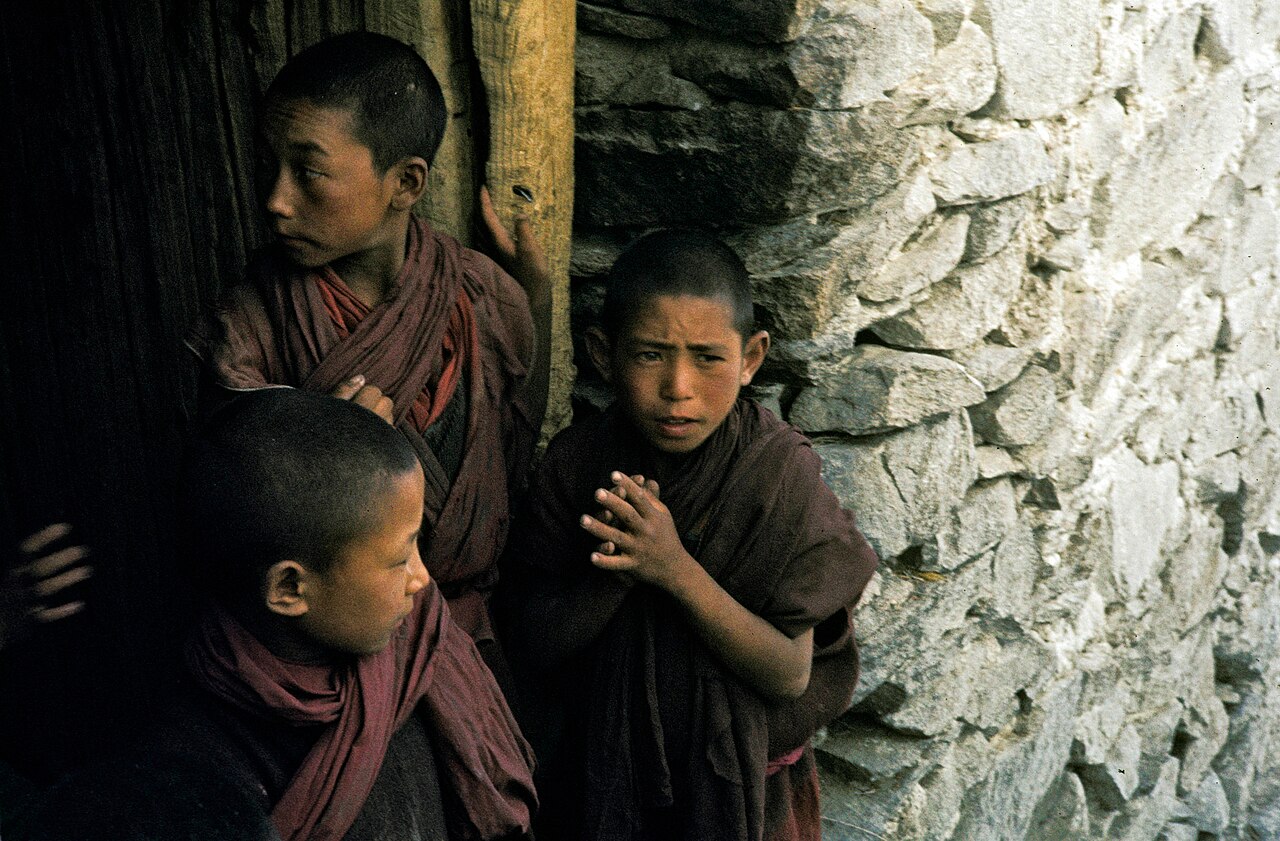
Becoming a monk in Ladakh is rarely a sudden adult choice. Most boys enter the monastery between the ages of six and ten, often brought by their parents from remote mountain villages up valleys like Zanskar or Nubra. In many rural communities, sending one son to the monastery is both a spiritual merit and a practical way to ensure the child receives housing, food, and a comprehensive education.
The first few years involve living as a novice, learning the Tibetan alphabet, basic arithmetic, and memorising short ritual texts. Older monks act as mentors, correcting posture during prostrations and teaching the intricate finger mudras used in rituals. It is a humble beginning, carrying heavy loads of supplies up the steep stone steps that lead to the upper courtyards.
Life as a Novice
Novices spend hours sitting on wooden benches in the courtyard, reciting verses aloud until the sounds blend into a steady drone. Discipline is firm but rarely harsh, rooted in a shared understanding that spiritual progress requires breaking old habits of impatience.
Spiritual Studies and Philosophical Debate
Education at Thiksey is not limited to rote memorisation. As young monks grow older, they participate in dialectical debate sessions in the sunny courtyards. One monk stands to pose a question while clapping his hands sharply, and his opponent sits, responding with defensive logic while the questioner shifts his weight and gestures vigorously.
These debates are designed to test the students' understanding of emptiness, dependent origination, and Buddhist logic. It can look aggressive to an outsider, with much shouting and finger-pointing, but it is ultimately an exercise in mutual intellectual refinement. Senior teachers sit nearby, intervening only to correct a flawed philosophical premise.
The Monastery as the Anchor of Local Culture
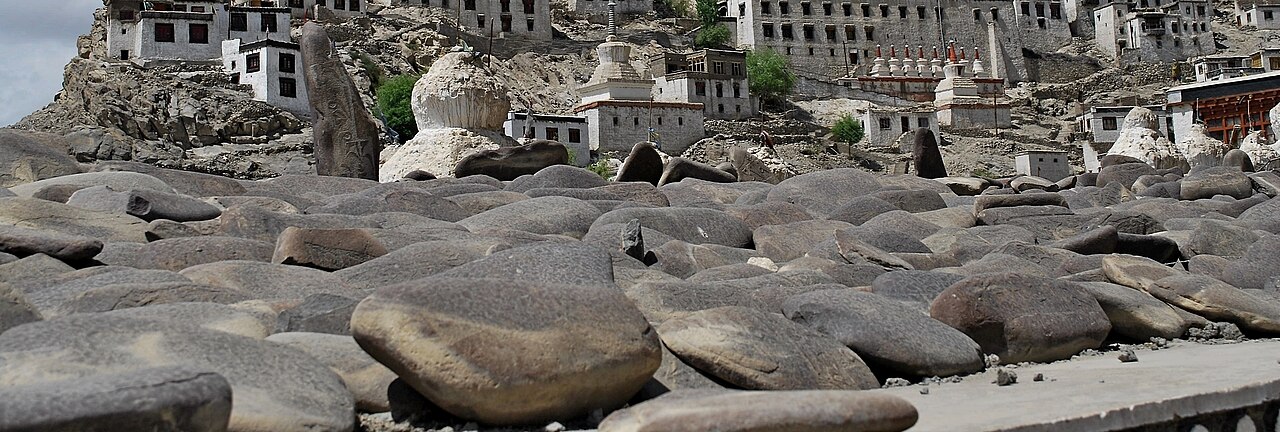
Monastic life at Thiksey extends far beyond the stone walls. For the farming families living in the villages below, the monastery is the center of secular and spiritual life. Monks are invited into homes to perform protective rituals during the sowing and harvesting seasons, to bless newborns, and to perform funeral rites when a community member passes away.
When the annual Thiksey Gustor festival arrives in autumn, the entire valley converges on the courtyards. The masked Cham dances performed by the monks are not merely cultural performances; they are sacred rituals that subdue negative forces and restore balance to the ecosystem of the Indus Valley. Supporting these traditions has always been a communal effort.
Before you book
Observing monastic life at Thiksey reminds us that spirituality in Ladakh is not a weekend retreat, but a lifelong discipline carried out in harsh, beautiful conditions. The patience required to maintain these ancient walls mirrors the internal patience required to study the texts within them.
If you find yourself planning a journey through this valley, we would love to help you arrange a respectful visit to Thiksey, perhaps combining it with nearby cultural stops like Hemis Monastery or a quiet afternoon overlooking the Indus from Leh town. Reach out to our team whenever you are ready to explore Ladakh properly.
Plan Your Cultural Journey to Ladakh
Let our local team design a thoughtful, unhurried itinerary that respects the traditions of Thiksey and the wider Indus Valley.
Talk to Our Ladakh SpecialistsCaption for your own post
Morning light hitting the prayer wheels at Thiksey. Behind these yellow and red walls lies a vibrant community keeping centuries of Gelugpa tradition alive. #Ladakh #Thiksey #SpiritualTravel
Written by
Kashmir, Jammu & Ladakh specialists
We plan and run trips across Kashmir, Jammu and Ladakh every week of the year. Everything here comes from routes we drive, stays we inspect and questions our travellers actually ask.
Written by Stanzin Norbu, who has spent over a decade documenting Himalayan monasteries and guiding travellers across the Indus Valley.
Quick answers
Questions we get asked
Can foreigners become monks at Thiksey Monastery?
Generally, no. While Westerners can study Buddhism or stay as guests in certain retreat centres, ordination as a monk at traditional monasteries like Thiksey is reserved for those integrated into the local Himalayan cultural and linguistic framework.
What language do the monks use for study and prayer?
Classical Tibetan is used for all scriptures, prayers, and philosophical texts, while Ladakhi (a dialect of Tibetan) is spoken in daily conversation among the monks and local visitors.
How many monks currently reside at Thiksey?
The population fluctuates around eighty to one hundred resident monks, including young novices, working monks, and senior teachers overseeing the complex.
Do the monks leave the monastery?
Yes. Monks frequently travel to attend teachings by the Dalai Lama in Dharamshala, visit family during winter breaks, or study at larger monastic universities in South India.
Photography credits
- Photo: Bernard Gagnon Canon EOS REBEL T4i · CC BY-SA 4.0
- Photo: Sumita Roy Dutta · CC BY-SA 4.0
- Photo: Christopher Michel · CC BY 2.0
- Photo: Bernard Gagnon Canon EOS REBEL T4i · CC BY-SA 4.0
- Photo: H. Grobe · CC BY 3.0
- Photo: Vyacheslav Argenberg · CC BY 4.0
- Photo: Drashokk · CC BY-SA 4.0