Indira Gandhi Tulip Garden: History, Origins, and Opening Dates
Trace the fascinating backstory of how a neglected wasteland became Asia's most celebrated spring attraction.
Curious about when was indira gandhi memorial tulip garden opened? Read our comprehensive guide detailing its origins, historical background, and seasonal schedules.
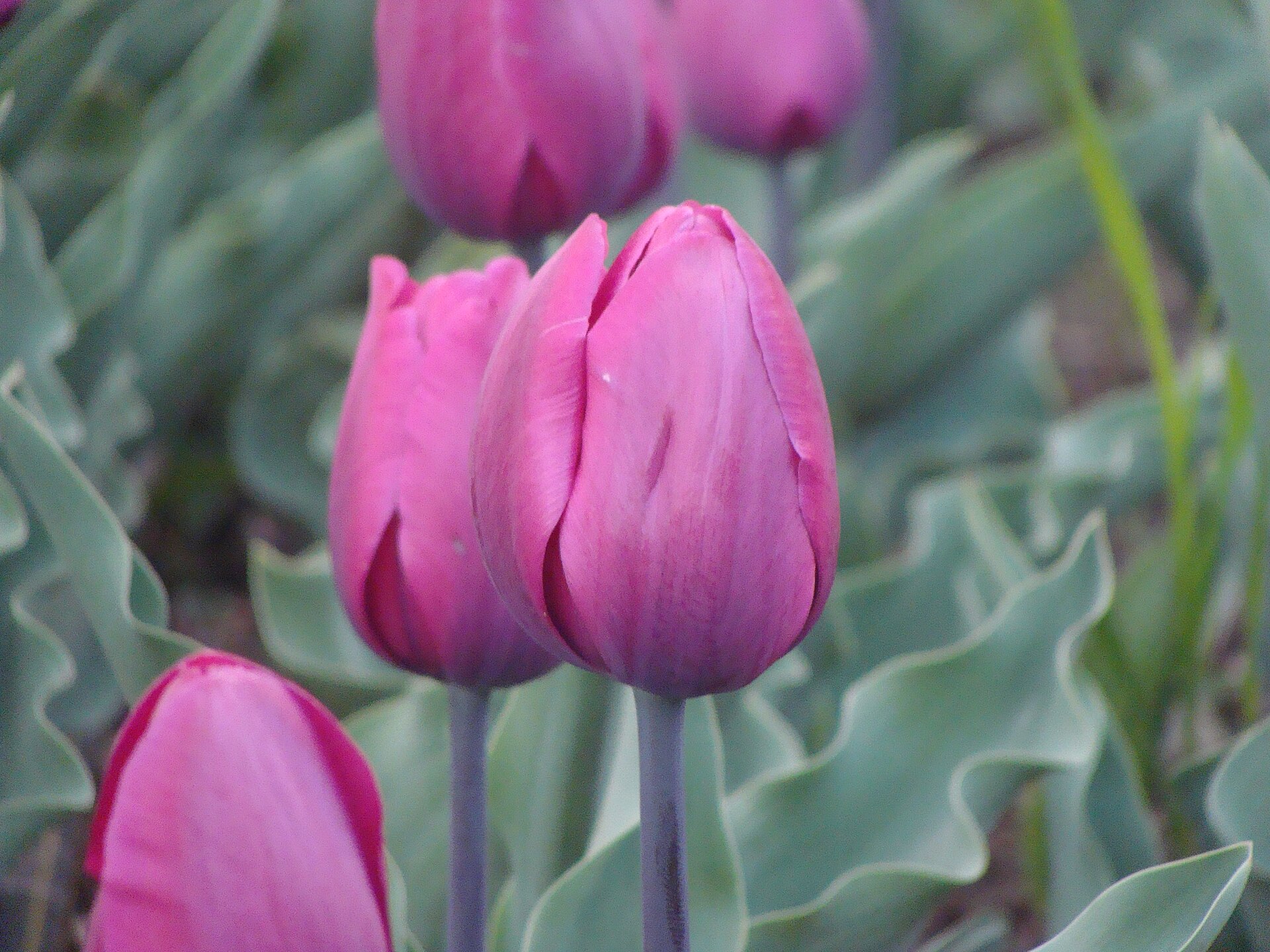
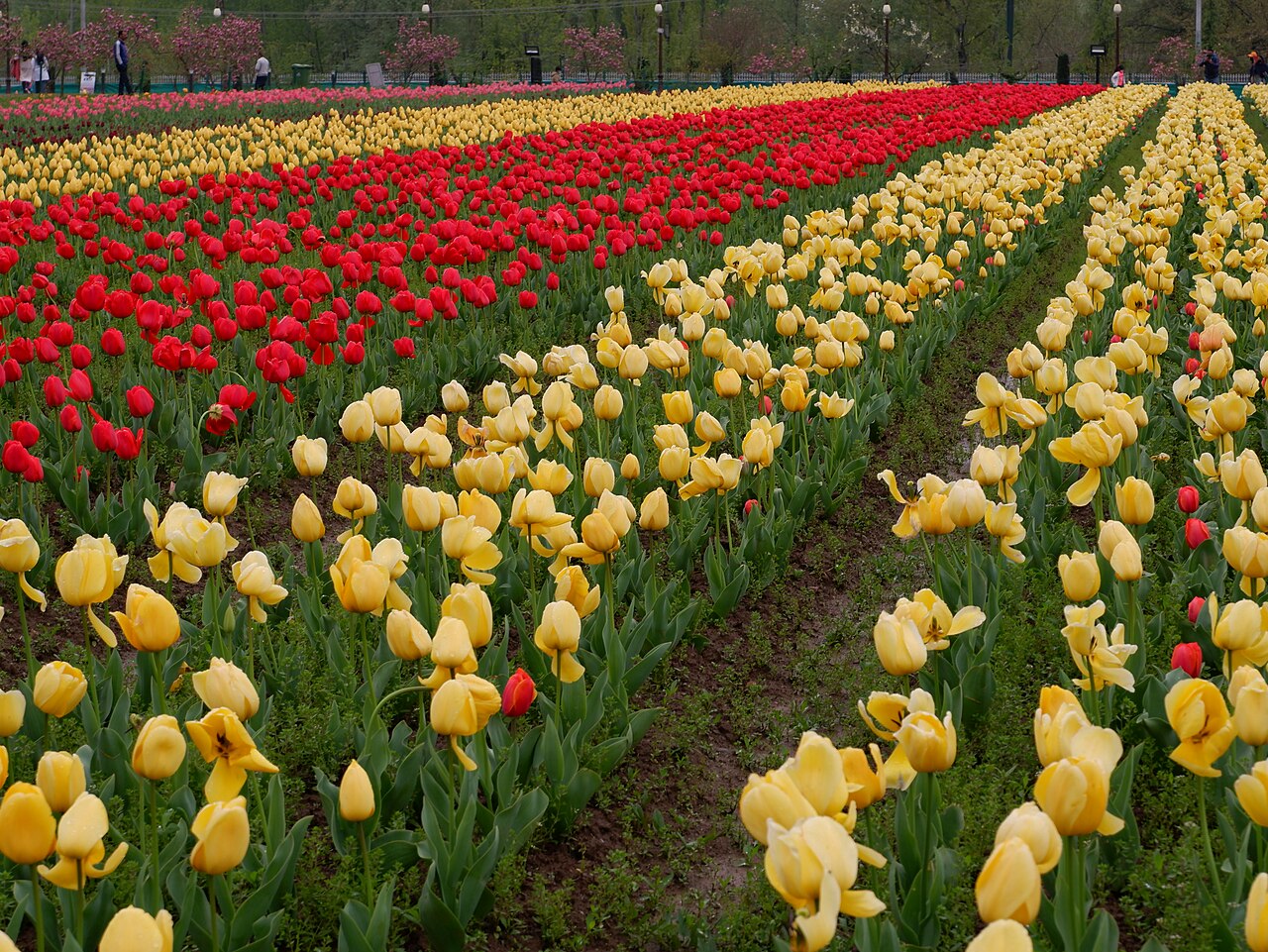
Opened in 2007, the garden draws hundreds of thousands of visitors every spring.Photo: Abdars · CC BY-SA 3.0
Long before it became a sea of red and yellow blossoms every April, the sloping hillside beneath the Zabarwan mountains was a neglected piece of land used mostly as a dumping ground and nursery fallback.
If you have ever wondered when was indira gandhi memorial tulip garden opened, the answer dates back to 2007. Conceived as a major initiative to boost tourism and extend the traditional visitor season in the Kashmir valley, the project transformed a barren slope into a horticultural masterpiece.
Understanding the history behind the gates adds remarkable depth to a stroll through the terraces. Here is how the garden came to be, how it is maintained year-round, and what you need to know before planning your visit.
The Origins: Transforming Waste Land into a Horticultural Marvel
The idea for a massive tulip display in Srinagar took root in the mid-2000s when state tourism planners looked for ways to attract visitors to Kashmir during the shoulder season before the summer holiday rush began.
When was indira gandhi memorial tulip garden opened? The official inauguration took place in March 2007, spearheaded by then-Chief Minister Ghulam Nabi Azad. Originally named Siraj Bagh, it was later renamed in honour of former Prime Minister Indira Gandhi.
Transforming the rocky, sloping terrain required massive earthmoving, soil conditioning, and the installation of a sophisticated irrigation system fed by natural mountain springs running down from the Zabarwan range.
Horticultural Expertise: Importing Dutch Bulbs to Srinagar
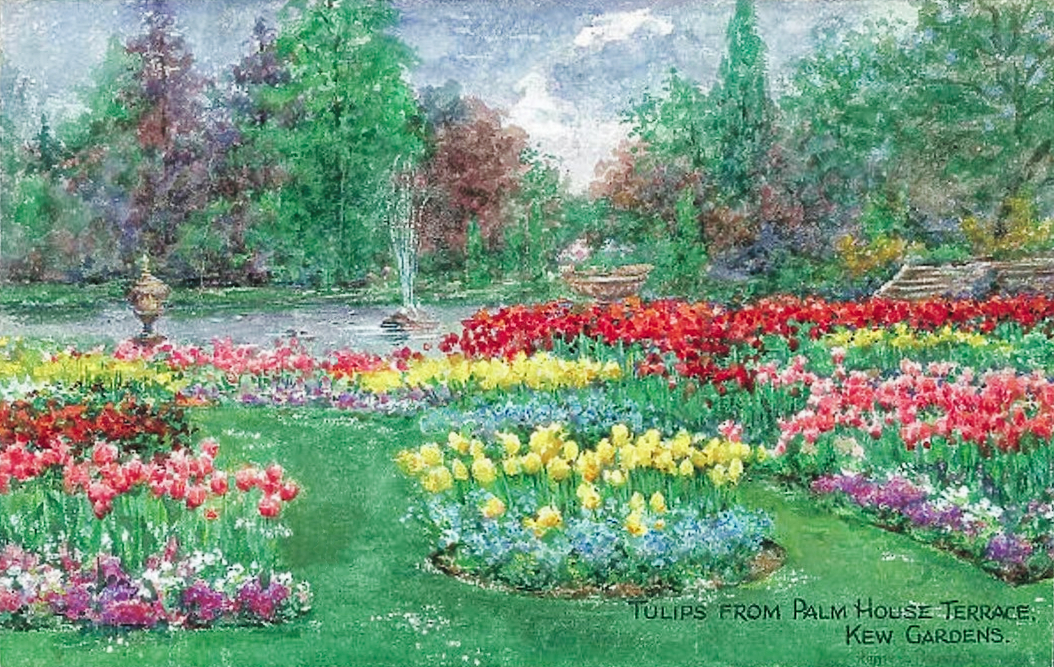
Growing tulips successfully requires specific climatic conditions: cold winters, well-draining soil, and mild spring temperatures. Srinagar matched these requirements almost perfectly, mirroring the famous bulb fields of the Netherlands.
During the initial setup, agricultural experts imported hundreds of thousands of tulip bulbs directly from Amsterdam. Over the years, the floriculture department has continued to refresh the stock, experimenting with new colours, petal structures, and heights.
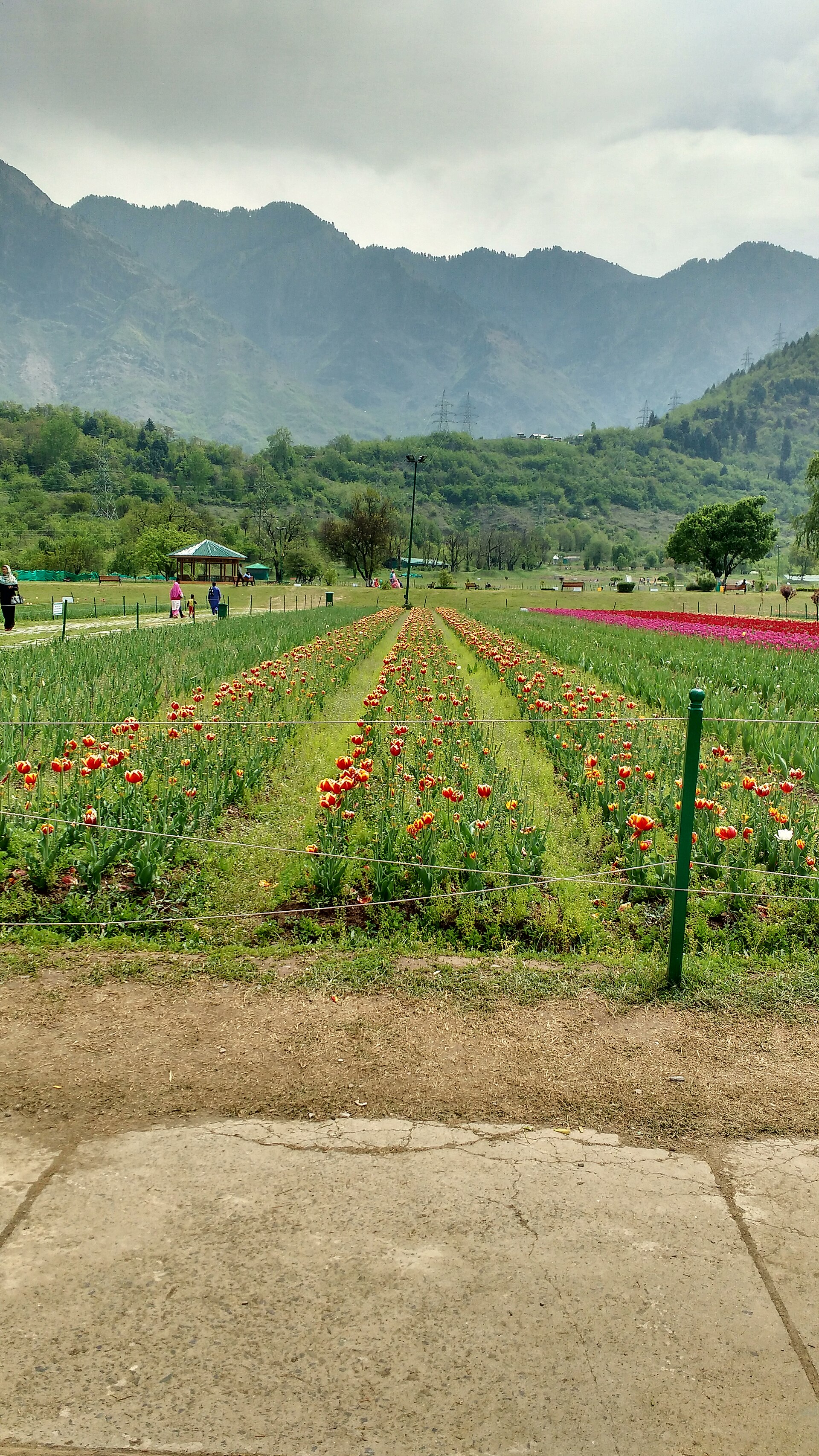
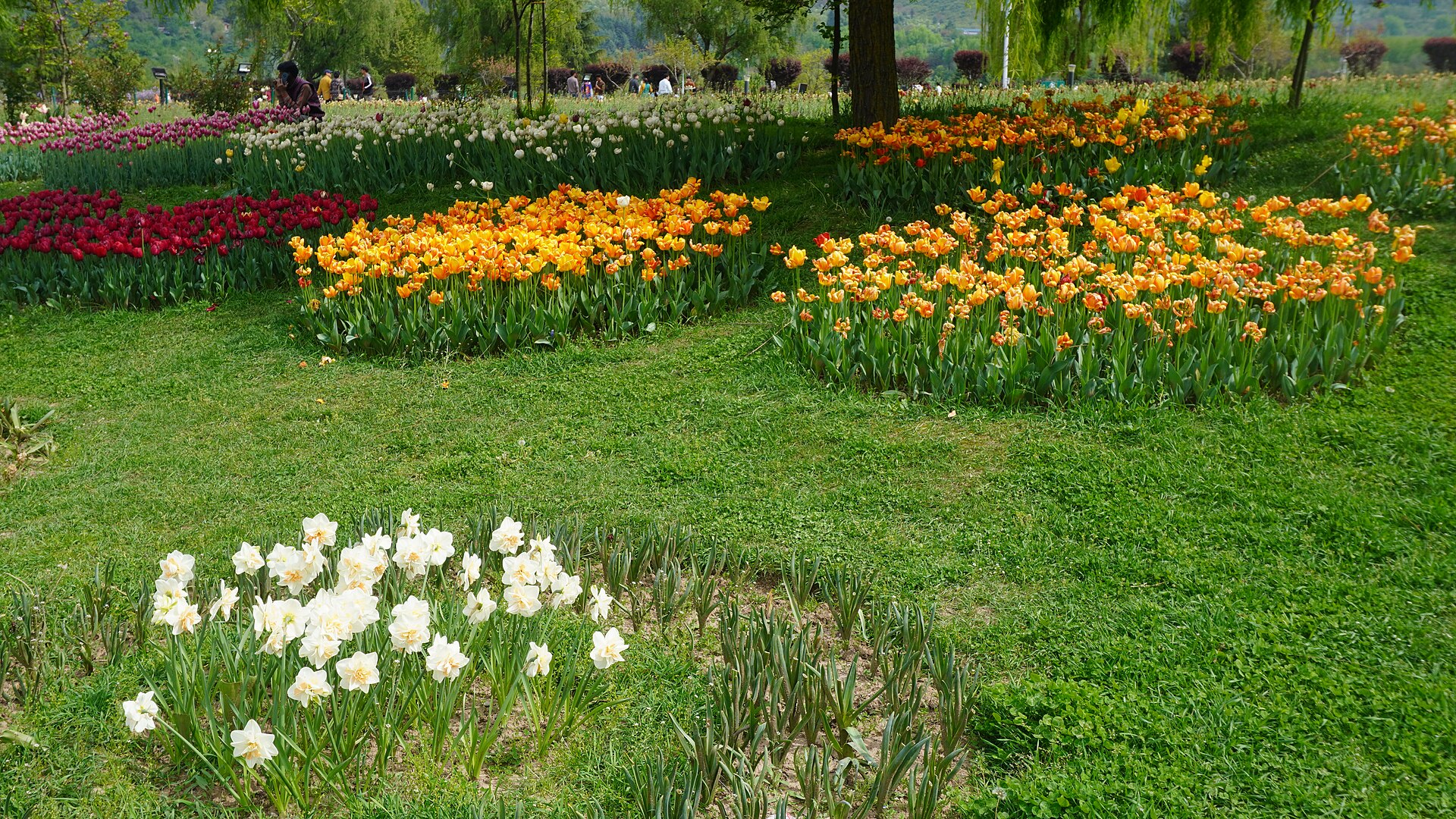
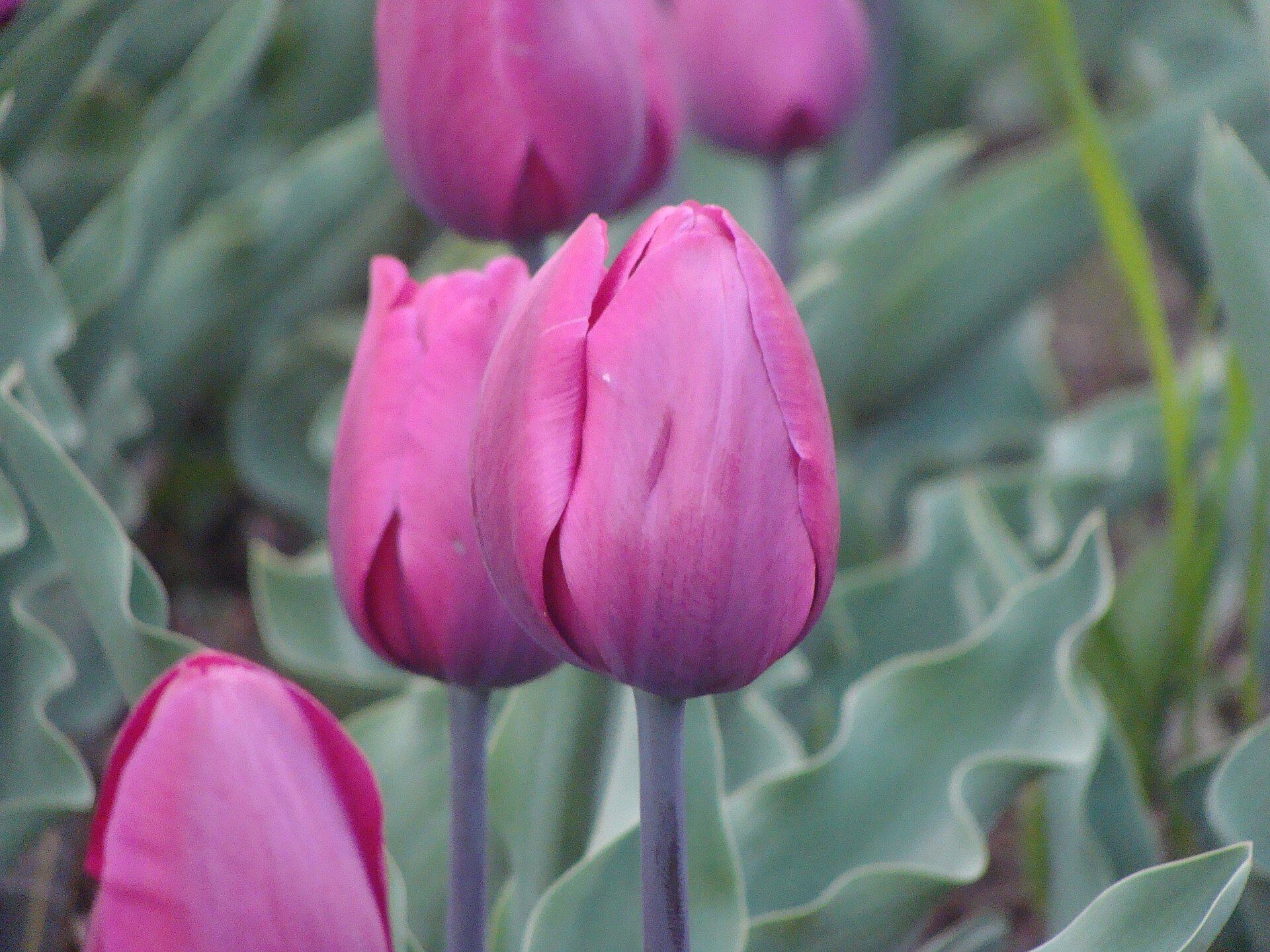
Today, over fifty varieties bloom across seven terraced levels, making it the largest installation of its kind in all of Asia.
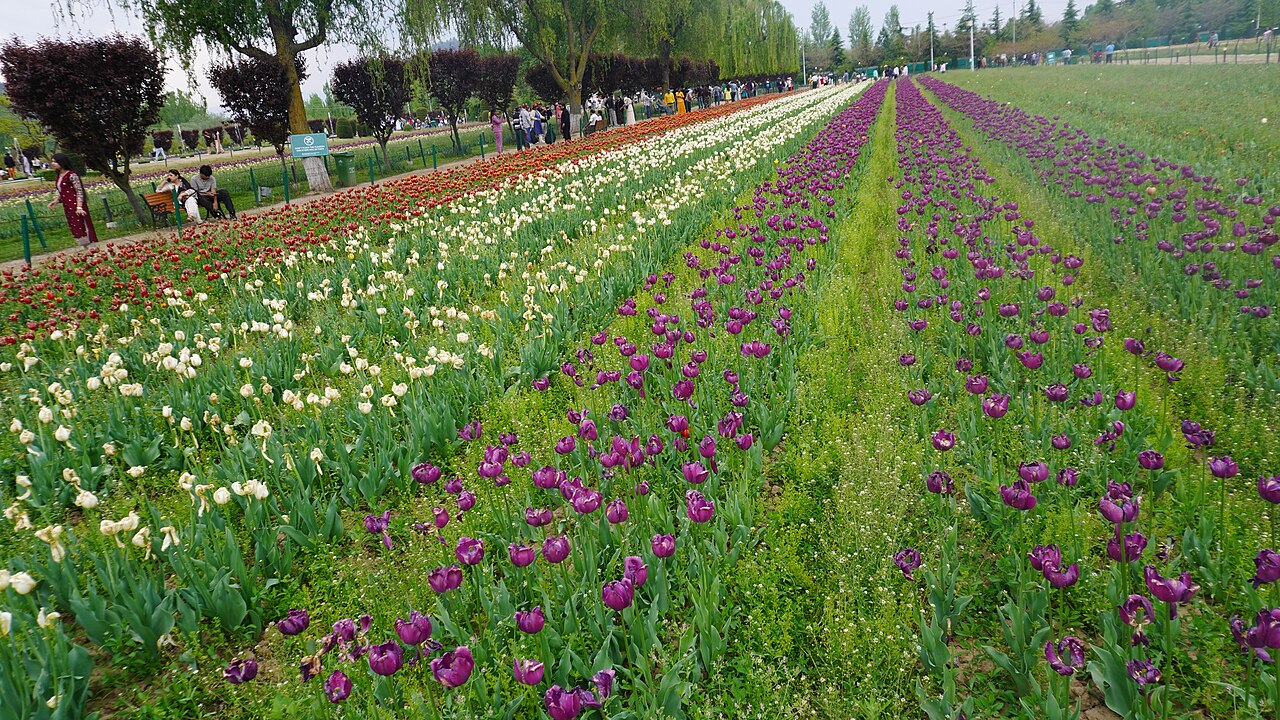
Transforming the rocky, sloping terrain required massive earthmoving, soil conditioning, and the installation of a sophisticated irrigation system fed by natural mountain springs.
Navigating Opening Dates and Seasonal Schedules
Because the blooming period is entirely dependent on winter snowfall and spring temperature spikes, the garden does not open on a fixed calendar day every year.
Typically, the gates open in the final week of March and remain accessible to the public for roughly thirty days until the petals drop in late April. Local authorities announce the exact opening date a week or two in advance once they assess bulb maturity.
If you are booking an indira gandhi tulip garden tour package, experienced operators build a buffer into your itinerary to accommodate minor shifts in the opening schedule.
Maintenance and the Year-Round Cycle
Visitors often assume the garden looks like this all year. In reality, the vibrant display lasts barely a month. For the remaining eleven months, the park is a working agricultural research station and nursery.
Once the blooming season concludes in late April, workers dig up every single bulb, sort them by health and size, and store them in temperature-controlled facilities through the hot summer and monsoon months.
In autumn, the soil is tilled, enriched with organic compost, and replanted by hand in precise geometric patterns, setting the stage for the next cycle of winter dormancy and spring revival.
Architectural Layout and Terraced Design
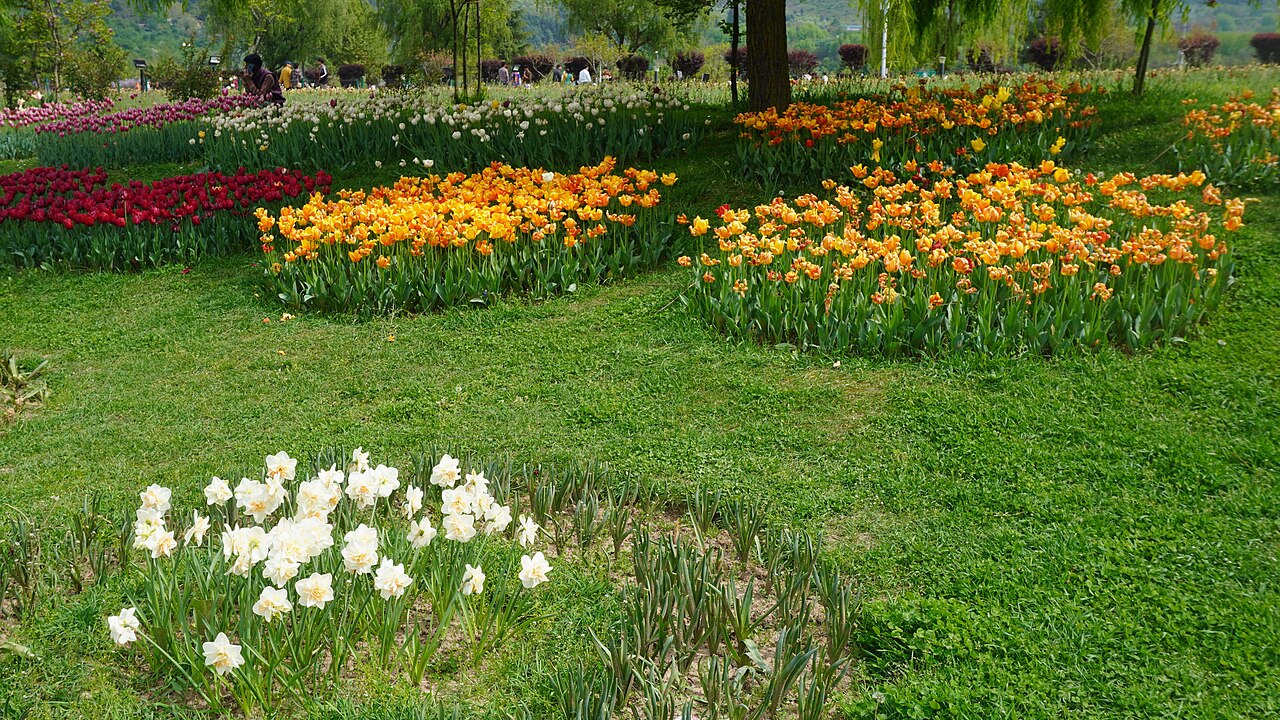
The park is designed on a sloping terrain, rising across seven terraced lawns that follow the natural contours of the Zabarwan foothills. This stepped layout ensures that every flower bed receives adequate sunlight and drainage.
Walking paths wind between the beds, allowing visitors to get close to the blooms without stepping on delicate root systems. Fountains and water channels run down the centre of the park, echoing the traditional design principles of nearby Mughal gardens like Nishat and Shalimar.
These water features not only enhance the aesthetic appeal but also help regulate humidity levels around the delicate stems during warm afternoon hours.
Combining History with Modern Travel Logistics
Visiting Srinagar during the tulip festival requires careful coordination, especially regarding hotel bookings around Dal Lake and transport through the city's narrow arterial roads.
Knowing the history and operational background of the gardens helps travellers appreciate why the rules—such as no picnicking inside the flower beds—are strictly enforced by local authorities.
Our team at Skywale provides seamless itineraries that combine historical insights with comfortable lodging and private transport, ensuring your spring trip is entirely stress-free.
How Skywale Can Assist Your Kashmir Journey
Planning a trip from other parts of India or abroad involves coordinating flights, heritage houseboat stays, and local sightseeing permits. Doing this independently during peak spring season can be daunting.
We take care of every detail, from airport transfers in clean private vehicles to arranging expert local guides who can share the full story of Srinagar's horticultural landmarks.
Visit our /contact page to share your travel dates and let us help you design a memorable springtime holiday in the valley.
Before you book
The transformation of a neglected hillside into Asia's premier tulip garden stands as one of modern Srinagar's great success stories. It reflects a deep commitment to natural beauty and agricultural innovation.
If you want to witness this living history for yourself, get in touch with our team. We are ready to help you experience the very best of spring in Kashmir.
Plan your historical spring tour
Connect with our local experts to arrange your 2026 spring holiday in Srinagar.
Contact Us TodayCaption for your own post
Looking back at the origins of Srinagar's famous hillside garden, opened in 2007 to celebrate spring in Kashmir.
Written by
Kashmir, Jammu & Ladakh specialists
We plan and run trips across Kashmir, Jammu and Ladakh every week of the year. Everything here comes from routes we drive, stays we inspect and questions our travellers actually ask.
Written by Bilal Sofi, heritage tour coordinator for Skywale Packages, specialising in the cultural and agricultural history of the Kashmir valley.
Quick answers
Questions we get asked
When was Indira Gandhi Memorial Tulip Garden opened?
The garden was officially opened in March 2007 by the then-Chief Minister of Jammu and Kashmir to extend the tourism season.
What was the original name of the tulip garden?
It was originally established under the name Siraj Bagh before being renamed in honour of former Prime Minister Indira Gandhi.
Why is the garden open for only one month a year?
Tulips require cool spring temperatures to bloom; once summer arrives, the flowers wither and the bulbs must be stored underground.
Are the tulip bulbs grown locally in Kashmir?
While some propagation occurs locally, the primary stock of high-grade bulbs is imported directly from the Netherlands each year.
Who manages the maintenance of the tulip garden?
The park is managed and maintained by the Floriculture Department of the Government of Jammu and Kashmir.
Photography credits
- Photo: Abdars · CC BY-SA 3.0
- Photo: Unpetitprole · CC BY-SA 4.0
- Photo: Annie Pressland · Public domain
- Photo: Harvinder Chandigarh · CC BY 4.0
- Photo: Harvinder Chandigarh · CC BY 4.0
- Photo: JyotiPN · CC BY-SA 4.0
- Photo: Harvinder Chandigarh · CC BY 4.0